


Topic 3 – Democracy or republic?
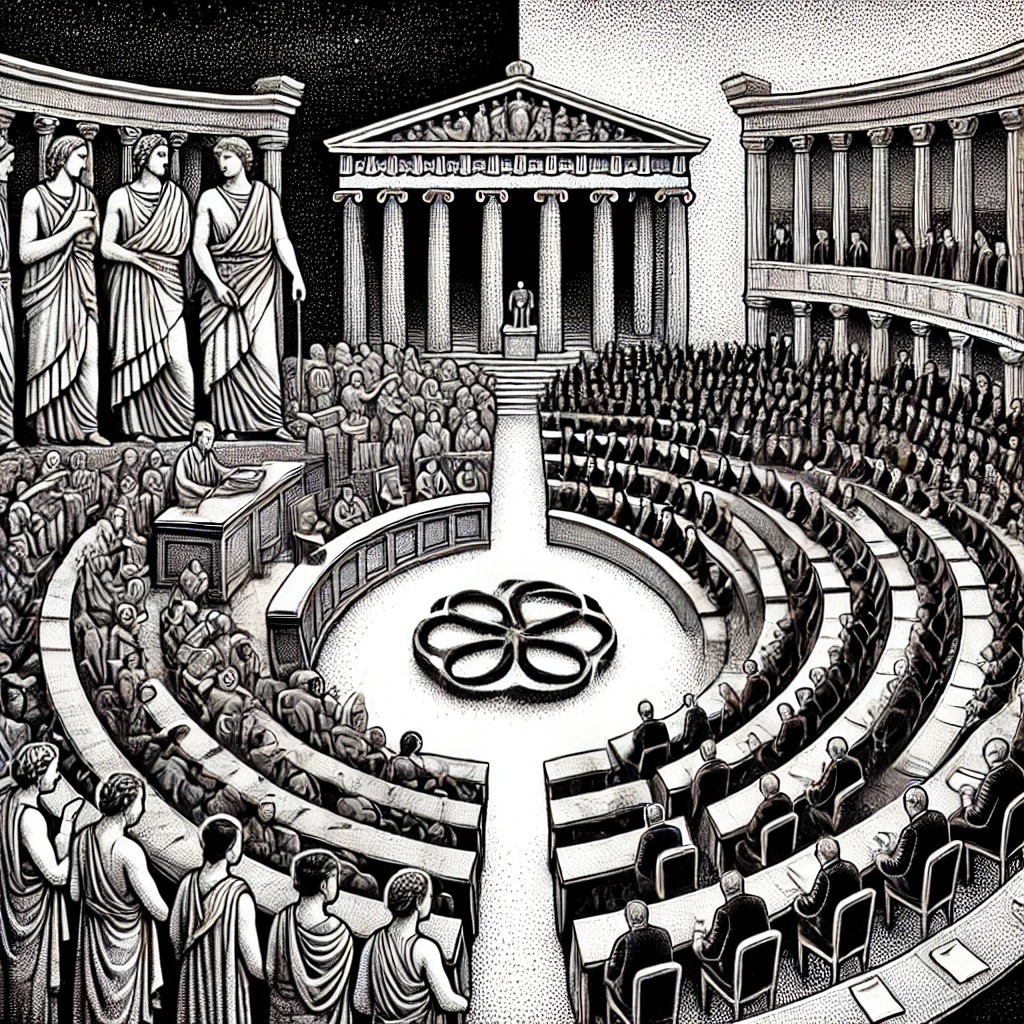
Topic 3 – Democracy or republic? 18 November 2024 Section overviewThis section explores the evolving concept of democracy, addressing its origins, theoretical foundations, and the dissonance between its ideals and practical applications. Central to this inquiry is the notion of “political agoraphobia”—the apprehension that democratic power can destabilize hegemonic structures and empower marginalized groups, threatening the authority of elite institutions (Dupuis-Déri, 2011). The text examines how democracy’s ideals, often rooted in egalitarianism and direct governance by the people, are paradoxically perceived as a risk to stability in Western liberal democracies. This is evidenced in critiques by influential figures such as Michel Crozier, Samuel Huntington, and Joji Watanuki, who argued that an “excess of democracy” can disrupt governance and advised moderation to maintain political control (Crozier et al., 1975). Powered By EmbedPress
Topic 2 – What is democracy?

Topic 2 – What is democracy? 18 November 2024 Section overview This section explores the evolving concept of democracy, addressing its origins, theoretical foundations, and the dissonance between its ideals and practical applications. Central to this inquiry is the notion of “political agoraphobia”—the apprehension that democratic power can destabilize hegemonic structures and empower marginalized groups, threatening the authority of elite institutions (Dupuis-Déri, 2011). The text examines how democracy’s ideals, often rooted in egalitarianism and direct governance by the people, are paradoxically perceived as a risk to stability in Western liberal democracies. This is evidenced in critiques by influential figures such as Michel Crozier, Samuel Huntington, and Joji Watanuki, who argued that an “excess of democracy” can disrupt governance and advised moderation to maintain political control (Crozier et al., 1975). Powered By EmbedPress
Topic 1 – Introduction

Topic 1 – Introduction 18 November 2024 Section overviewWith global warming exacerbating crises in food security, economic stability, and sustainable development, traditional democratic structures are increasingly under strain. This section explores the interplay between climate change and democratic systems, emphasizing the urgent need for transformative thinking in both ecological and political realms. It argues that addressing climate change requires more than technological fixes; it demands deep social, political, and epistemological shifts, particularly given the democratic backsliding and rise of authoritarian responses to crises. Powered By EmbedPress